The Growing Wealth Gap

Income inequality has increased dramatically in the United States over the past several decades. While the wealthiest Americans have seen significant gains, many middle and lower-income families struggle with stagnant wages and rising living costs. 44% of the global population are struggling to meet basic needs.

The Problem

Income inequality refers to the unequal distribution of income across a population. In the U.S., the top 1% earn a disproportionate share of total income while millions of workers face rising housing, healthcare, and education costs. Billionaires and Elon Musk have a net worth of $800 billion, while as of 2025, approximately 800 million people, or about 9.9% of the world's population, live in extreme poverty, defined as surviving on less than $2.15 per day.

Economic inequality can lead to reduced economic mobility, political instability, and unequal access to opportunities. Approximately 47.9 million people in the U.S. lived in food-insecure households as of early 2026, meaning they lacked consistent access to enough food due to limited resources. This includes 14 million children.
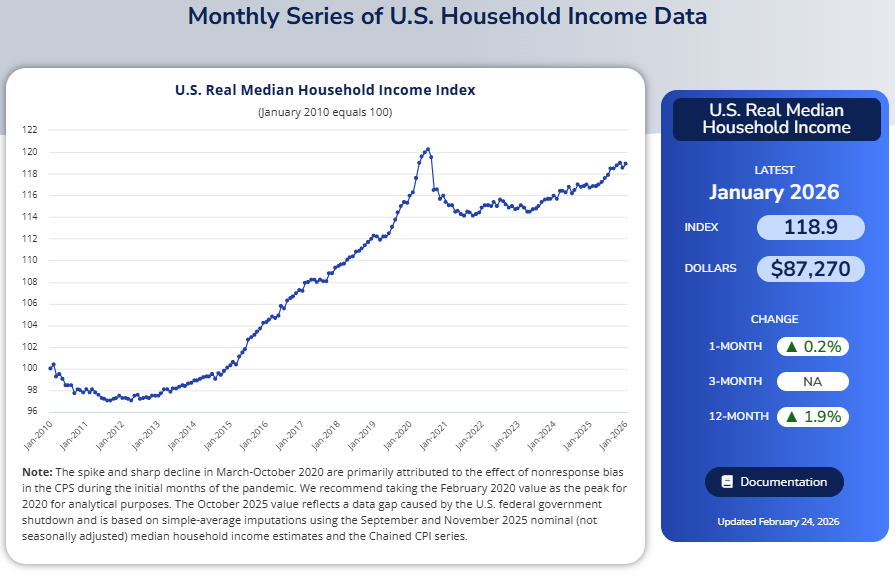
image for politcal

Key Facts

Top 1%

The top 1% of Americans hold more wealth than the entire middle class combined.

Poverty Rate

Approximately 800 million of the world's population, live in extreme poverty. 3.5 billion people (44% globally) struggle to meet basic needs.

CEO Pay

CEO compensation has grown over 900% since 1978 while worker pay has grown much slower.

Possible Solutions

Sources

Pew Research Center – Income Inequality Research

Economic Policy Institute – Wage Statistics

World Bank — Poverty Data

U.S. Census Bureau – Income Data