Cluster 01
Uncertainty is the real symptom
Users report that ambiguity — not the wheeze itself — drives the most anxiety. They can feel something, but can't assess its severity.
"I can't tell if it's serious or just a bad night."
"The not knowing is worse than the wheezing itself."
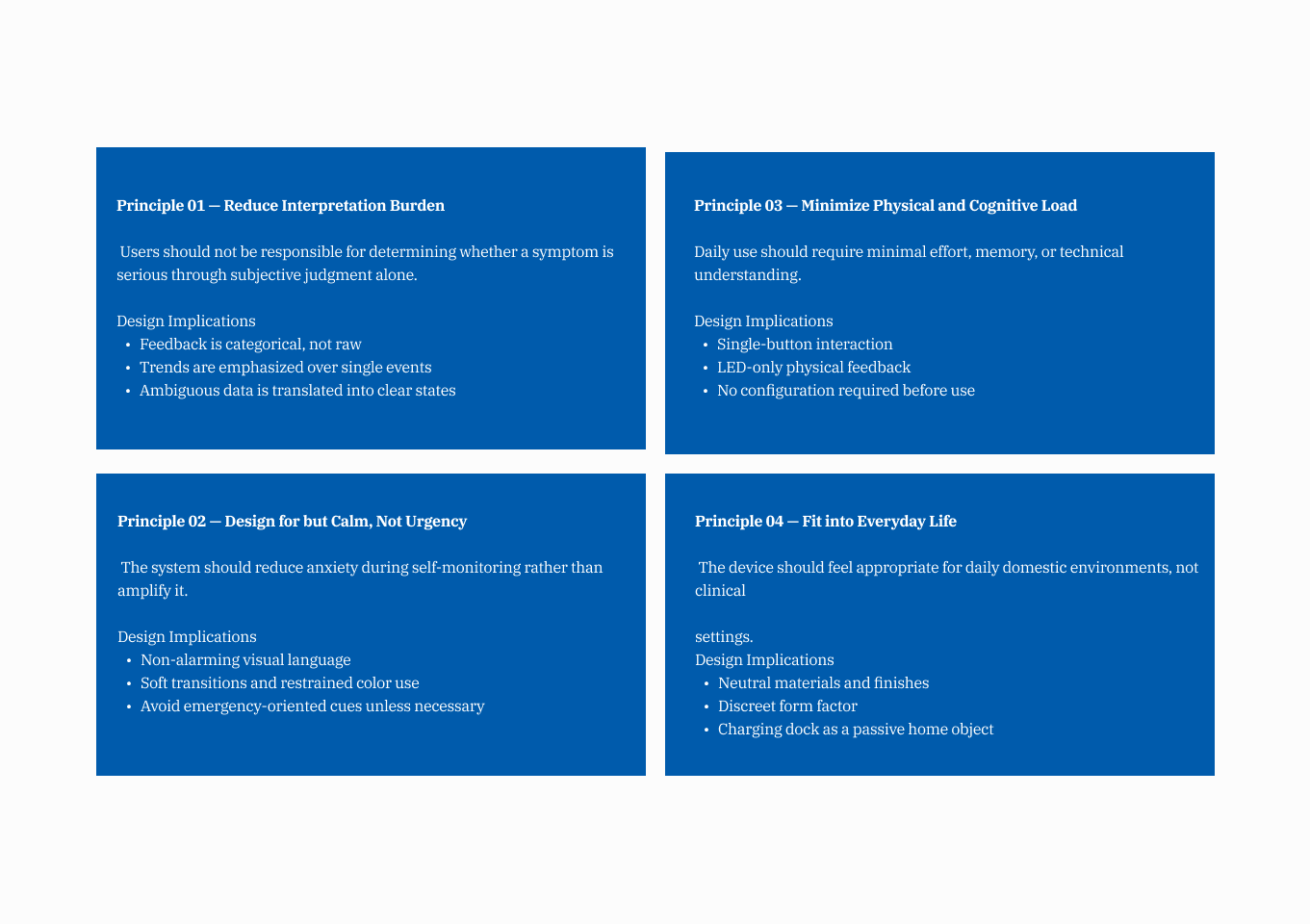
→ Design must reduce interpretation burden, not add more data.
Cluster 02
Symptoms vanish before the GP visit
Wheezing is episodic and nocturnal. By the time patients reach a clinician, there is no evidence — only subjective recall.
"By the time I see my GP, the symptoms are gone."
"I have nothing to show them — just my word."
→ The system must log and surface longitudinal data passively.
Cluster 03
Clinical tools alienate daily users
Existing products are designed for clinicians, not people. Medical jargon, uncomfortable wearables, and complex UIs prevent daily adoption.
"The apps give me numbers I don't understand."
"Those medical patches feel like I'm a patient 24/7."
→ The device must feel domestic, calm, and non-medical.