Animal agriculture is one of the biggest drivers of climate change, deforestation, and water pollution, yet it is largely missing from the climate conversation. The costs fall hardest on low-income communities and communities of color, who live beside factory farms and slaughterhouses, work in them, and have the least access to healthy food.
Environment: land use, emissions, and water pollution
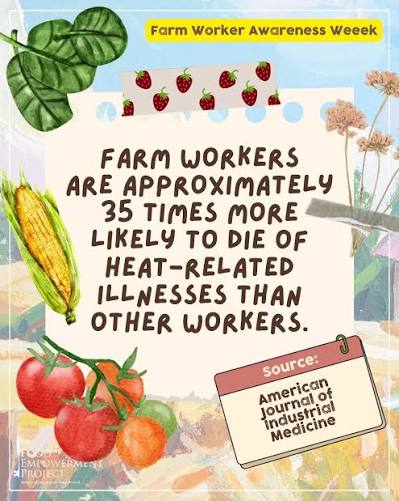
People: farm and slaughterhouse workers, and communities near factory farms
Access: food deserts and unequal access to healthy food
Access to Healthy Food
he goal of Food Empowerment Project (F.E.P.) is to raise awareness about how our food choices can change the world. By making informed, ethical food choices, we can make a difference and take a stand against abuses. F.E.P. encourages people to use their individual choices to eat with their ethics and use their collective voices to help bring about positive change. We strive to do this in our outreach as well as on our website.
As an organization dedicated to looking at food justice from a local and global perspective, we also consider the impact that racism has had on equal access to healthy foods in the US. Knowing the importance that fresh fruits and vegetables have on one’s health and that Black and Brown communities and low-income communities lack access to them, we have added this to our work. We only go into communities when invited, and our work is to ensure the voices of the community are heard. Also, it is easier for people to go vegan when they have access to fresh fruits and vegetables (they can’t if they don’t).
Access to Healthy Food
When asked, F.E.P. works with community members to survey the access to healthy foods and also conducts focus groups with local organizations in Black and Brown communities and low-income communities. We then use our reports to inform public officials of our findings and encourage policy changes. Our work on the lack of access to healthy foods over the years has allowed us to collaborate with various community organizations as well as governmental bodies.
Our reports on access to healthy foods have been cited by the United Nations Human Rights Committee and are a resource for many schools and universities across the globe. In 2017, the city of San José, CA, and the city of Vallejo, CA, recognized and honored F.E.P. for our vegan food justice work, including our access work within their cities.
In the City of Vallejo, we are working with community members to start a worker-owned cooperative in one of the most impacted areas.
Currently, we are also using our corporate campaign Shame on Safeway to pressure Safeway/Albertsons to change their unjust policy that can leave neighborhoods without a grocery store for more than a decade.
The climate conversation ignores animal agriculture, and marginalised communities pay for it.