Scientific Evidence
The Evidence of a Planet in Transition
Climate change is no longer something that exists only in scientific prediction or political debate. It is visible in measurable, recorded shifts across atmosphere, ocean, ice, and land. Rising temperatures, warmer seas, glacier retreat, sea level rise, and intensifying weather extremes all point toward the same conclusion: the planet is undergoing a real and accelerating transformation. The most important part of this evidence is not simply that change is happening, but that scientists can now identify the cause with much greater certainty than before.
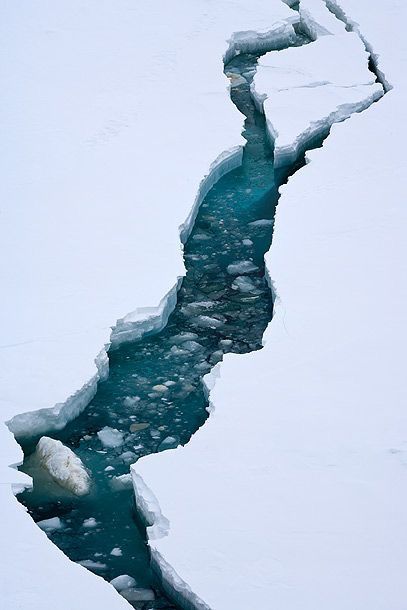
This matters because the thaw is not just a visual image of melting ice. It represents a larger instability moving through Earth’s systems. What appears to be one environmental issue is actually a web of connected changes, including more heat in the atmosphere, more energy in the ocean, more ice loss on land, and more vulnerability along coasts and within cities. The climate emergency is no longer abstract. It can be observed, compared, measured, and felt.
1.55°C
2024 was about 1.55°C above the pre-industrial average.
8 in
Approximate global sea level rise since 1880.
90%
Of excess heat is stored in the ocean.
3.3–3.6B
People live in highly climate-vulnerable contexts.
Fact 01
Human systems are driving the warming of the planet.
One of the clearest conclusions in climate science today is that warming is not happening randomly. The atmosphere, ocean, and land are warming because of human activity, especially through fossil fuel use, greenhouse gas emissions, industrial production, and land-use change. This matters because it changes how the crisis should be understood. Climate change is not just an unfortunate environmental condition that appeared on its own. It is connected to systems of energy, development, extraction, and growth that have shaped the modern world for generations.
This evidence makes the crisis more specific and more political. If warming has identifiable causes, then responsibility also becomes easier to trace. The data no longer supports the idea that climate change is merely a natural cycle or a temporary fluctuation. It shows that the warming planet is tied to infrastructures and choices that humans created and continue to maintain. That is why the climate emergency is not only about temperature. It is also about the systems that produced it.
Fact 02
The thaw can be measured in ice loss, sea level rise, and physical change.
The word “thaw” can sound metaphorical, but climate records show that it is also literal. Glaciers are retreating, land ice is shrinking, and sea levels continue to rise. These are not vague impressions or isolated images from faraway places. They are measurable changes that reveal how warming is reshaping the physical state of the planet. When ice melts on a large scale, the consequences extend beyond polar landscapes. They affect coastlines, water systems, ocean circulation, and the future stability of places where people live.
Sea level rise is especially important because it translates climate change into visible material risk. It means flooding becomes more likely, coastal systems become more fragile, and the boundary between land and water becomes less secure. In that sense, the thaw is not only about loss. It is also about movement. Ice melts, oceans respond, shorelines shift, and infrastructures that once felt stable are pushed into uncertainty.
Fact 03
Extreme weather events are linked parts of one destabilized climate system.
Heat waves, intense rainfall, wildfire conditions, drought, and flooding are often discussed as if they are separate kinds of disaster. But climate evidence increasingly shows that these are related expressions of the same instability. A warmer atmosphere can hold more moisture, which increases the chance of heavy rainfall and flooding. At the same time, hotter and drier conditions can intensify drought and wildfire risk. The ocean also absorbs most of the excess heat trapped by greenhouse gases, which affects broader weather patterns and adds energy to the system.
This means the climate crisis should not be read event by event in isolation. When one region experiences heat, another experiences flood, and another wildfire, these are not unrelated stories. They reveal a larger system under pressure. The language of “extreme weather” sometimes makes these events sound temporary or accidental. But the evidence shows that they are increasingly part of a recurring pattern shaped by a warming world.
Fact 04
The scale is global, but the burden is uneven.
Climate change is planetary in scale. It is not limited to one country, one ecosystem, or one season. Rising temperatures, warming oceans, and shifting environmental conditions affect the whole Earth system. At the same time, the evidence also shows that vulnerability is not evenly shared. Billions of people already live in highly climate-vulnerable contexts, which means that the crisis is not only about temperature records or environmental indicators. It is also about who is exposed, who is protected, and who is left with fewer resources to adapt.
This is one of the most important parts of the evidence. Climate change is global in measurement, but unequal in experience. The same warming world produces very different conditions depending on where someone lives, what infrastructure surrounds them, and what resources are available. That is why evidence should not be understood only as scientific measurement. It also reveals patterns of inequality. The thaw is environmental, but it is also social and political in how its risks are distributed.